
Analyzing poorly received scripts, like those found as a PDF – such as “Bad Words” – and observing resulting auditions reveals crucial insights into effective storytelling.
David Koepp’s archive and Reddit discussions offer resources for examining scripts that struggled, highlighting the impact of writing on performance.
Understanding these failures is paramount for aspiring screenwriters and actors seeking to avoid common pitfalls and elevate their craft.
The Allure of Failure: Why Study Bad Scripts?

Examining unsuccessful scripts, potentially sourced as a PDF like “Bad Words”, offers a unique learning opportunity often overlooked in traditional screenwriting education. Analyzing these “failed” works, accessible through resources like David Koepp’s archive or Reddit discussions, provides invaluable practical lessons.
Success stories are inspiring, but failures reveal why things don’t work, pinpointing specific weaknesses in structure, dialogue, or character development. Studying these scripts allows aspiring writers to proactively avoid repeating those mistakes.
Furthermore, understanding how poor writing impacts an actor’s audition – the struggle to salvage flawed material – highlights the symbiotic relationship between script and performance, fostering empathy and informed collaboration.
Defining “Bad”: Subjectivity and Objective Criteria
Determining what constitutes a “bad” script is inherently complex, blending subjective taste with objective flaws; While a script like the PDF of “Bad Words” might have found production, its reception doesn’t automatically equate to quality. David Koepp’s archive acknowledges even produced scripts can be imperfect.
Objective criteria include structural issues – inconsistent pacing, weak conflict – and technical errors like excessive exposition. Subjectivity enters with character relatability and thematic resonance.
However, a script leading to demonstrably poor auditions – where actors struggle with unworkable dialogue or motivations – suggests objective failings impacting performance, offering a measurable indicator of weakness.

Sources for Finding Poorly Received Scripts

Resources like David Koepp’s script archive and The Script Savant (hosting “Bad Words” PDF) offer access to produced, yet potentially flawed, screenplays.
David Koepp’s Script Archive: A Mixed Bag
David Koepp’s online script archive presents a fascinating, albeit uneven, collection of his work, offering a glimpse into the evolution of screenplays before production. Containing over two dozen films, including those directed by Spielberg and De Palma, the archive invites viewers to judge the scripts’ quality independently.
Koepp himself acknowledges that some scripts are “good,” others “not,” but all proved valuable learning experiences. This archive is a potential goldmine for those studying bad auditions by bad actors, as it provides access to material that demonstrably reached the production stage, despite potential flaws.
However, discerning truly “bad” scripts requires critical analysis, as production doesn’t automatically equate to poor writing; factors like director vision and actor talent also play significant roles.
The Script Savant: Specific Example ౼ “Bad Words”
The Script Savant provides a readily available PDF of Andrew C. Dodge’s screenplay for “Bad Words,” offering a concrete example for analysis. Published on March 2nd, 2023, this script allows for a detailed examination of dialogue, character motivations, and scene structure.
Analyzing “Bad Words” in the context of bad auditions by bad actors can reveal how challenging material impacts performance. The script’s comedic tone and potentially abrasive protagonist present unique hurdles for actors during auditions.
Examining the script alongside audition footage (if available) could illuminate how actors navigate problematic dialogue or attempt to inject nuance into underdeveloped characters, providing valuable insights into the interplay between script quality and performance.
Reddit and Online Forums: Potential, but Limited Access
Reddit, specifically the r/Screenwriting forum (as of April 7, 2025), represents a potential source for discovering poorly received scripts, though access is often restricted. Users have requested links to produced, yet critically panned, screenplays, indicating a desire for learning from failures.
However, the provided link currently faces network security blocks, hindering direct access to shared materials. Online forums generally offer anecdotal evidence and discussions, rather than readily available PDF copies of scripts.
Finding specific scripts linked to bad auditions by bad actors through these channels requires diligent searching and may yield limited results due to copyright concerns and file availability;
Common Scriptwriting Mistakes Evident in Bad Auditions
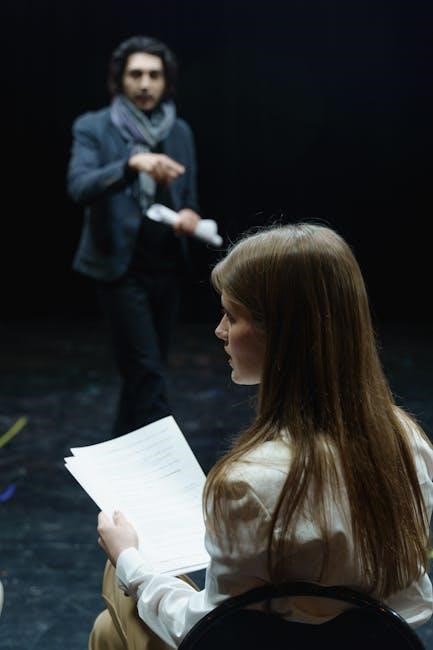
Analyzing scripts like “Bad Words” reveals flaws such as unrealistic dialogue, weak motivations, and pacing issues that directly contribute to poor audition performances.
Dialogue That Doesn’t Ring True
Authentic dialogue is the lifeblood of compelling scenes, yet poorly written scripts often stumble here, leading to disastrous auditions. Scripts, like examples potentially found in PDF format and discussed on platforms like Reddit, frequently feature exposition dumps disguised as conversation.
Characters articulate thoughts they’d never vocalize in reality, sounding robotic and unnatural. This forces actors to wrestle with lines that lack subtext or emotional resonance, hindering their ability to create believable performances.
The result is often stilted delivery, awkward pauses, and a general sense of disconnect between the character and their words, ultimately sabotaging the audition.
Effective dialogue reveals character, advances plot, and feels organically woven into the scene’s fabric – something often missing in flawed scripts.
Unrealistic Character Motivations
A fundamental flaw in many poorly received scripts – often discoverable as a PDF online – lies in characters acting without believable motivations. Actors facing such material in auditions struggle to justify illogical choices, creating performances that feel hollow and unconvincing.
If a character’s actions don’t stem from a clear, understandable desire or need, the performance lacks grounding. Discussions on platforms like Reddit often highlight scripts where characters abruptly shift behaviors without internal logic.
This forces actors to invent motivations, a task that rarely translates well in a limited audition setting, and exposes the script’s weakness.
Strong character work demands internal consistency; motivations must be earned and drive the narrative forward organically.
Pacing Issues: Too Slow or Too Fast
Scripts available for review – sometimes found as a PDF – frequently suffer from pacing problems, significantly impacting audition performances. A script moving too slowly can bore actors and readers alike, making it difficult to maintain engagement during a short audition.
Conversely, a rushed narrative leaves little room for character development or emotional resonance. Online forums, like those on Reddit, often critique scripts that cram too much plot into too little time.
Actors struggle to navigate scenes lacking natural rhythm, resulting in performances that feel either sluggish or frantic.
Effective pacing allows for moments of both tension and release, creating a dynamic and compelling experience for both performer and audience.
Lack of Clear Stakes and Conflict
Analyzing scripts – often accessible as a PDF – reveals a common flaw: a deficiency in clearly defined stakes and compelling conflict. Without understanding why a character’s actions matter, actors struggle to deliver believable and engaging auditions.
Scripts sourced from archives like David Koepp’s or discussed on platforms like Reddit, frequently exhibit this issue. A weak central conflict diminishes the dramatic tension, leaving performers with little to latch onto.
Actors require a strong understanding of what their character stands to gain or lose.
Ambiguous motivations and low-stakes scenarios result in flat, uninspired performances, hindering the actor’s ability to create a compelling portrayal.
Analyzing Performances Based on Weak Scripts
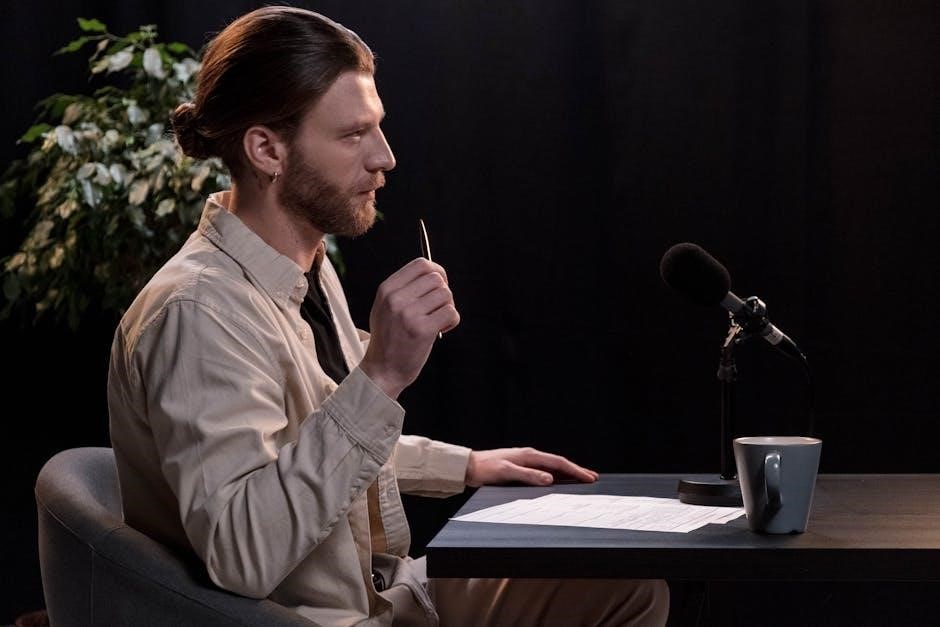
Examining auditions stemming from flawed scripts – often found as a PDF – reveals how actors navigate, and often fail to salvage, poor material.
The Actor’s Struggle with Unworkable Material
Actors facing scripts like those available as a PDF, such as “Bad Words”, often encounter significant hurdles. Unclear motivations, expositional dialogue, and clichéd archetypes – common flaws – leave performers with little to grasp onto.
Without a solid foundation in the writing, even talented actors struggle to create believable, engaging characters. They may attempt to inject nuance or subtext, but these efforts can feel forced or misdirected when the core script is fundamentally weak.
The challenge lies in making choices that feel authentic within the constraints of the material, often resulting in performances that appear strained or uninspired; Resources like David Koepp’s archive demonstrate examples of scripts that may have presented similar difficulties.
How Bad Writing Impacts Delivery
Poorly constructed scripts, exemplified by examples found as a PDF like “Bad Words”, directly impede an actor’s delivery. Unnatural dialogue forces unnatural line readings, hindering genuine emotional connection; Inconsistent tone and poorly defined scene objectives leave actors unsure of the intended emotional weight.
Consequently, pacing suffers; scenes may drag due to excessive exposition or feel rushed due to a lack of build-up. Actors may compensate by overacting or underacting, attempting to “fix” the writing through performance.
Analyzing scripts from sources like David Koepp’s archive reveals how weak writing limits an actor’s ability to create a compelling and believable portrayal, impacting rhythm and authenticity.
Identifying Attempts to Salvage a Flawed Script
Actors facing weak scripts, such as those available as a PDF like “Bad Words”, often instinctively attempt to compensate for deficiencies. Observable strategies include exaggerated physicality, heightened emotionality, or improvised line delivery to clarify meaning.
These efforts, while demonstrating commitment, frequently appear as stylistic choices rather than organic character expression. Analyzing audition footage reveals moments where actors pause awkwardly, searching for subtext absent in the writing.
Resources like Reddit discussions and David Koepp’s script archive highlight common flaws, allowing identification of these “salvage” attempts and understanding the challenges actors face with subpar material.

Specific Examples of Script Flaws Leading to Poor Auditions
Scripts like “Bad Words” (PDF available online) demonstrate flaws – expositional dialogue, clichés, and undefined objectives – hindering actors and impacting audition quality.
Overly Expositional Dialogue
A frequent flaw in scripts leading to poor auditions, exemplified in examples like those potentially found in PDF format online, is excessively expositional dialogue. Actors struggle when forced to deliver lines solely designed to tell the audience information, rather than show it through action and subtext.
This often results in wooden, unnatural deliveries, as the dialogue lacks organic flow and feels forced. Instead of engaging in genuine interaction, actors become mere vessels for conveying plot points.
Scripts requiring characters to explicitly state their feelings or past histories, rather than revealing them through behavior, create a significant challenge. The audition suffers because the actor has little room for interpretation or nuanced performance, ultimately diminishing the scene’s impact.
Clichéd Character Archetypes
Scripts riddled with tired character archetypes – the “damsel in distress,” the “gruff detective,” or the “evil mastermind” – frequently yield lackluster auditions. Actors face an uphill battle when tasked with breathing life into figures lacking originality, often found within readily available PDF scripts online.
These predictable portrayals offer little opportunity for nuanced performance, forcing actors into stereotypical boxes. The audition process becomes a demonstration of fulfilling expectations rather than showcasing unique interpretation.
Consequently, performances feel flat and uninspired, as the script provides minimal depth or complexity. Actors struggle to find compelling motivations beyond the archetype’s surface-level traits, resulting in a predictable and ultimately unengaging audition.
Poorly Defined Scene Objectives
Analyzing scripts – often accessible as PDF documents – reveals that unclear scene objectives cripple actor’s auditions. When a scene’s purpose is ambiguous, actors struggle to establish compelling motivations and believable actions, hindering a strong performance.
Without a clear understanding of what a character wants within a scene, the audition devolves into reciting lines without genuine intent. This lack of focus translates to a flat, uninspired delivery, failing to captivate the casting directors.
Consequently, actors resort to broad generalizations, unable to pinpoint the specific emotional core driving their character’s behavior. This results in a performance lacking nuance and ultimately failing to resonate with the audience or those evaluating the audition.
Inconsistent Tone and Genre Blending
Examining scripts, often found as PDF downloads, frequently exposes jarring tonal shifts and mishmashed genre elements. These inconsistencies create significant challenges for actors during auditions, demanding they navigate conflicting demands within a single scene.
When a script veers wildly between comedy and drama, or attempts to blend action with romance without a cohesive vision, actors struggle to find a consistent performance approach. This leads to a disjointed and unconvincing portrayal.
Consequently, auditions become exercises in confusion, as actors attempt to reconcile the script’s conflicting signals, ultimately delivering a performance that feels tonally fractured and lacks a clear identity.

Resources for Improving Scriptwriting and Audition Material
Utilize screenwriting books, courses, and workshops to refine your craft. Seek peer and professional feedback on scripts and audition pieces for growth.
Screenwriting Books and Courses
Delving into foundational texts is crucial for aspiring screenwriters. Robert McKee’s “Story” remains a cornerstone, dissecting narrative structure with unparalleled depth. Syd Field’s “Screenplay” offers a practical, paradigm-based approach to formatting and outlining.
For a more contemporary perspective, Linda Seger’s “Making a Good Script Great” focuses on character development and thematic resonance. Online courses, such as those offered by MasterClass or Skillshare, provide structured learning from industry professionals.
These resources equip writers with the tools to avoid common pitfalls observed in poorly received scripts, ultimately enhancing the quality of their work and audition material.
Audition Technique Workshops
Navigating flawed scripts demands specialized audition skills. Workshops focusing on “cold reading” are invaluable, teaching actors to quickly analyze and interpret unfamiliar material. Meisner technique training emphasizes truthful reactions, crucial when facing weak dialogue or inconsistent character motivations.
Improvisation classes foster adaptability, enabling actors to subtly enhance underwritten scenes. Stella Adler’s approach encourages imaginative exploration, helping performers find compelling choices even within limiting constraints.
These workshops empower actors to salvage potentially disastrous auditions, demonstrating resourcefulness and artistry when confronted with scripts like those found in online archives.
Feedback from Peers and Professionals
Constructive criticism is vital when dissecting scripts and audition performances. Sharing scenes with fellow actors provides diverse perspectives on clarity, believability, and emotional impact, especially with challenging material.
Seeking guidance from experienced directors or acting coaches offers invaluable insights into script interpretation and performance choices. Professionals can pinpoint weaknesses in both the writing and the delivery, offering targeted suggestions.
Analyzing “Bad Words” or scripts from David Koepp’s archive with seasoned eyes reveals patterns of common flaws and effective strategies for navigating them during auditions.

Learning from Mistakes in Script and Performance
Examining “Bad Words” and scripts from resources like David Koepp’s archive, alongside analyses of resulting auditions, underscores a crucial truth: even flawed writing offers learning opportunities.
Recognizing common pitfalls – weak dialogue, inconsistent character motivations, or pacing issues – equips both writers and actors with the tools to avoid repeating these errors.
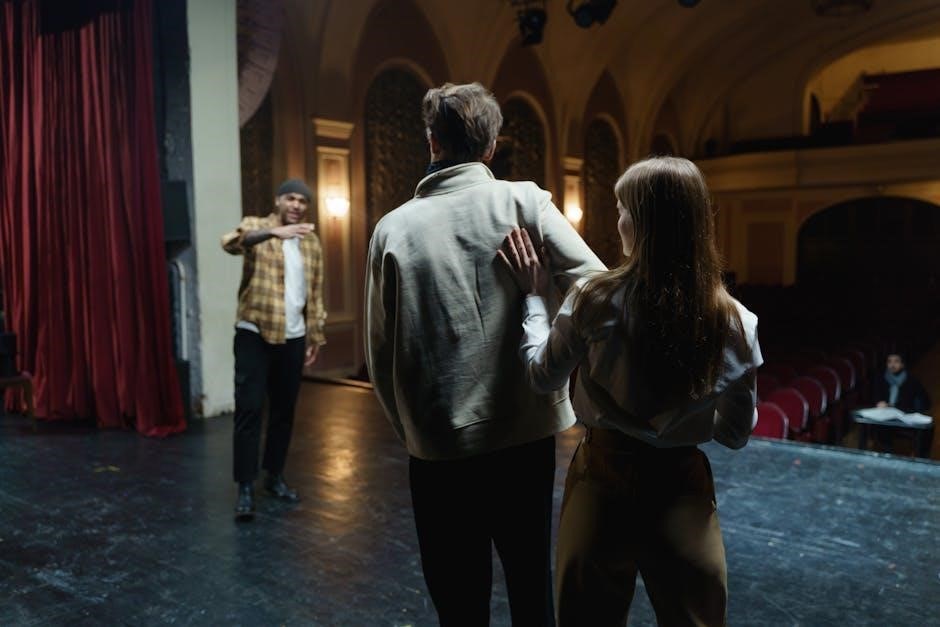
Understanding how poor scripts impact performance highlights the actor’s resilience and resourcefulness, while emphasizing the script’s foundational importance. Reddit discussions further illuminate these challenges.
Ultimately, studying failures fosters growth, refining both the art of scriptwriting and the craft of acting.
Leave a Reply
You must be logged in to post a comment.