The DEWALT 1600 Jump Starter (DXAELJ16) is a robust, portable power solution, delivering 1600 peak amps for vehicles up to V8 engines.
This versatile device combines jump-starting capabilities with a 120 PSI digital compressor and convenient USB power ports for charging devices.
Capable of 30 jumps on a single charge, it offers a 3X faster recharge capacity, ensuring readiness for various automotive emergencies and power needs.
Furthermore, it features an alternator testing function, verifying proper vehicle charging system operation, and provides both USB-C and USB-A connectivity.
Overview of Features
The DEWALT 1600 Jump Starter (DXAELJ16) boasts a comprehensive suite of features designed for automotive and portable power needs. Primarily, it delivers 1600 peak amps, sufficient for jump-starting cars, trucks, and SUVs with engines up to V8 capacity, offering reliable assistance in emergency situations.
Beyond jump-starting, this unit integrates a digital air compressor, capable of inflating tires and sports equipment to a maximum of 120 PSI, adding convenience for on-the-go inflation tasks. Powering personal devices is facilitated through integrated USB ports, including a 25W Fast Power Delivery USB-C port and a 15W USB-A port, functioning as a portable power bank.
Notably, the jump starter can provide up to 30 jump starts on a single full charge, and its recharge capacity is three times faster than conventional models. A built-in alternator test function helps diagnose vehicle charging system issues, while the compact design ensures portability and ease of storage.
Target Vehicles: Up to V8 Engines
The DEWALT 1600 Jump Starter (DXAELJ16) is engineered to provide reliable jump-starting power for a broad range of vehicles, specifically targeting those with engine sizes up to and including V8 configurations. This encompasses most passenger cars, light-duty trucks, and SUVs commonly found on the road today.
The 1600 peak amp output ensures sufficient cranking power for engines typically found in these vehicle classes, even in colder weather conditions where battery performance is diminished. While capable of handling V8 engines, it’s important to note that extremely large displacement or high-performance V8s may require additional assistance.
The jump starter’s versatility extends to smaller engine sizes as well, making it suitable for 4-cylinder and 6-cylinder vehicles. Users can confidently utilize this device for a wide spectrum of automotive applications, knowing it’s designed to meet the demands of various engine types within the specified V8 limit.
Key Specifications: Peak Amps & USB Power
The DEWALT 1600 Jump Starter (DXAELJ16) boasts impressive key specifications, starting with its 1600 peak amps of jump-starting power. This substantial output provides the necessary energy to quickly and effectively start a discharged vehicle battery. Complementing this is a 12V DC output for powering accessories.
For modern device charging, the unit incorporates both a 25W Fast Power Delivery USB-C port and a 15W USB-A port. These ports allow users to conveniently charge smartphones, tablets, and other USB-powered devices on the go. The USB-C port offers faster charging speeds for compatible devices.
The jump starter also features a 120 PSI digital air compressor, adding to its versatility. It’s important to note that while USB-C charging of the jump starter itself isn’t explicitly supported by the included adapters, the unit relies on included AC and DC adapters for recharging.

Understanding the Jump Starter Components
The DEWALT 1600 Jump Starter includes jumper cables with clamps, USB-A and USB-C ports, a digital compressor with a PSI gauge, and indicator lights.
Identifying the Jumper Cables and Clamps
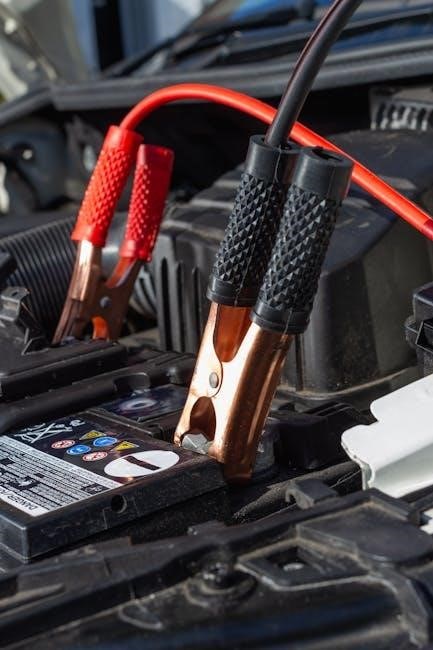
The DEWALT 1600 Jump Starter comes equipped with heavy-duty jumper cables, crucial for safely transferring power to a vehicle with a discharged battery; These cables feature color-coded clamps – red for the positive (+) terminal and black for the negative (-) terminal.
The clamps are designed with a robust grip to ensure a secure connection to the battery posts, even in challenging conditions. It’s vital to inspect the cables for any signs of damage, such as frayed wires or loose connections, before each use.
Proper identification of the positive and negative terminals is paramount to avoid sparking or potential damage to the vehicle’s electrical system. Always double-check the markings on the battery and the clamps before connecting. The length of the cables provides sufficient reach to connect to most vehicle battery locations.
Locating the USB Ports (USB-C & USB-A)
The DEWALT 1600 Jump Starter features integrated USB ports for convenient on-the-go charging of various devices. You’ll find both a USB-C port offering 25W Fast Power Delivery, and a USB-A port providing 15W of power. These ports are strategically located on the unit’s exterior for easy access.
The USB-C port allows for faster charging of compatible smartphones, tablets, and other devices. While the manual primarily recommends using the included DeWalt AC or DC adapters for charging the jump starter itself, the USB ports are designed for output – powering your devices.
It’s important to note that the USB-C port’s charging compatibility may have limitations, and it’s not intended for recharging the jump starter’s internal battery. These ports enhance the unit’s versatility beyond just jump-starting capabilities.
The Digital Compressor: PSI and Functionality
The DEWALT 1600 Jump Starter incorporates a built-in digital air compressor, capable of delivering up to 120 PSI. This feature allows you to inflate tires on cars, trucks, SUVs, and even sports equipment directly from the jump starter unit. The compressor’s digital gauge provides accurate pressure readings, ensuring precise inflation.
To operate, simply connect the compressor hose to the tire valve and set your desired pressure. The compressor will automatically shut off when the set pressure is reached, preventing over-inflation. This functionality is incredibly useful for maintaining proper tire pressure, improving fuel efficiency and extending tire life.
The compressor adds significant value, making the DXAELJ16 a multi-tool for roadside emergencies and routine vehicle maintenance.
Power Indicator and Charging Status Lights
The DEWALT 1600 Jump Starter features a comprehensive system of indicator lights to communicate its power status and charging progress. A prominent power indicator light confirms when the unit is active and ready for use. Separate charging status lights clearly display the charging level when connected to either the included AC or DC adapter.
These lights provide visual feedback, indicating whether the unit is currently charging, fully charged, or requires charging. Understanding these indicators is crucial for ensuring the jump starter is always prepared for emergency situations. The lights also help monitor battery health and identify potential issues.
Properly interpreting these signals ensures optimal performance and longevity of the device.

Jump Starting Procedures
Jump starting requires strict safety precautions; connect the red clamp to the positive (+) terminal and the black clamp to a grounded metal surface (-).
Initiate the jump start, then disconnect cables after a successful start, ensuring proper order to avoid sparks and potential damage to the vehicle’s electrical system.
Safety Precautions Before Jump Starting
Prior to attempting a jump start with the DEWALT 1600, several critical safety precautions must be observed to prevent injury or damage. Ensure both vehicles are turned off and not touching each other. Inspect the jumper cables for any signs of damage, such as frayed wires or loose clamps – do not use damaged cables.
Wear appropriate eye protection, such as safety glasses, to shield against potential sparks or battery acid. Avoid smoking or bringing open flames near the battery, as hydrogen gas can be released during the process. Confirm the vehicles have compatible voltage systems (typically 12V).
Do not attempt to jump start a frozen battery. If the battery is cracked or leaking, do not attempt a jump start; contact a professional. Ensure the parking brakes are engaged on both vehicles. Finally, familiarize yourself with the vehicle’s owner’s manual for any specific jump-starting instructions or warnings.
Connecting the Jumper Cables: Positive (+) and Negative (-) Terminals
When connecting the DEWALT 1600 jump starter cables, adhere strictly to the correct polarity to avoid damage. First, attach the red (positive +) clamp to the positive terminal of the discharged battery. Then, attach the other red clamp to the positive terminal of the good battery or the jump starter itself.
Next, connect the black (negative -) clamp to the negative terminal of the good battery or jump starter. Crucially, connect the final black clamp to a clean, unpainted metal surface on the disabled vehicle’s engine block, away from the battery.
This grounding point minimizes the risk of sparks igniting hydrogen gas near the battery. Ensure all clamps have a secure grip on the terminals or grounding point. Double-check the connections before proceeding to the jump-start process.
Initiating the Jump Start Process
After securely connecting the jumper cables, turn the ignition switch of the vehicle with the good battery to the ‘ON’ position, allowing it to run for a few minutes. This transfers some charge to the dead battery. Now, attempt to start the disabled vehicle. If it doesn’t start immediately, wait a few more minutes and try again.
Avoid prolonged cranking (more than 10-15 seconds) to prevent overheating the starter motor. If the vehicle still fails to start after several attempts, re-check the cable connections and ensure they are firm and correctly positioned.
The DEWALT 1600 provides 1600 peak amps, sufficient for most V8 engines, but a severely discharged battery may require a longer charging period from the booster.
Disconnecting the Cables After a Successful Jump
Once the vehicle starts, allow it to run for several minutes to recharge the battery. Disconnect the jumper cables in the reverse order of connection. First, remove the black (-) clamp from the disabled vehicle’s negative terminal. Then, remove the black (-) clamp from the booster’s negative terminal.
Next, disconnect the red (+) clamp from the booster’s positive terminal, and finally, remove the red (+) clamp from the disabled vehicle’s positive terminal. Ensure the cables do not touch each other or any metal parts of either vehicle during disconnection.
After disconnecting, it’s recommended to let the revived vehicle run for at least 20-30 minutes to allow the alternator to adequately recharge the battery. Consider having the battery and charging system professionally tested.
Charging the DEWALT 1600 Jump Starter
The DEWALT 1600 charges via included AC/DC adapters, though USB-C charging has limitations; utilize only DeWalt-provided adapters for optimal results.
Using the Included AC Adapter
To charge the DEWALT 1600 Jump Starter using the included AC adapter, first locate the charging port on the unit. Connect the AC adapter firmly into this port, and then plug the adapter into a standard 120V AC wall outlet.
During charging, the power indicator lights will illuminate, displaying the charging status. A full charge is indicated when all the indicator lights are solid and no longer flashing. The AC adapter provides a relatively quick recharge time, offering a 3X faster capacity compared to some alternatives.
Ensure the adapter is securely connected to both the jump starter and the wall outlet throughout the charging process. Avoid using damaged or frayed AC adapters, as this could pose a safety hazard. Only use the adapter specifically provided with the DEWALT DXAELJ16 to prevent damage to the unit.
Using the Included DC (Auto) Adapter
The DEWALT 1600 Jump Starter can also be charged using the included DC (auto) adapter, offering convenient charging while on the road. Locate the charging port on the unit and connect the DC adapter securely. Then, plug the adapter into a vehicle’s 12V DC cigarette lighter or accessory outlet.
Similar to the AC adapter, the power indicator lights will illuminate to show the charging progress. A full charge is indicated when all lights are solid. Note that charging via the DC adapter may take longer than using the AC adapter, depending on the vehicle’s charging system.
Ensure a stable connection at both ends of the adapter. Only utilize the provided DeWalt DC adapter to safeguard the jump starter from potential damage. Disconnect the adapter once the unit is fully charged to conserve energy.
USB-C Charging Compatibility (Limitations)
The DEWALT 1600 Jump Starter features a USB-C port, however, its primary function is for output – charging external devices, not for input – charging the jump starter itself. The manual explicitly states that only the included DeWalt household AC or Auto DC adapters should be used for recharging the unit.
While the USB-C standard theoretically supports charging, the jump starter’s internal charging circuitry is not designed to accept power through this port. Attempting to charge the unit via USB-C may result in extremely slow or no charging, and could potentially damage the device.
Relying on the provided adapters ensures optimal charging speed and prevents any compatibility issues. Utilizing third-party USB-C chargers is not recommended and voids any warranty related to charging malfunctions.
Charging Time and Full Charge Indication
The DEWALT 1600 Jump Starter boasts a 3X faster recharge capacity compared to previous models, significantly reducing downtime. When utilizing the included AC adapter, a full charge typically takes approximately 4-6 hours, depending on the initial battery discharge level.
The unit features clear indicator lights to display the charging status. During charging, the lights will illuminate sequentially, indicating the progress. Once all indicator lights are solid and no longer flashing, the jump starter is fully charged and ready for use.
Avoid leaving the unit connected to the charger for extended periods after reaching a full charge, as this could potentially reduce battery lifespan. Regular charging and maintaining a full charge ensures optimal performance and longevity.
Using the Digital Compressor
The integrated 120 PSI digital compressor efficiently inflates tires and sports equipment, featuring a clear digital display for precise pressure settings and monitoring.
Connecting to Tire Valve
To utilize the digital compressor, begin by unscrewing the protective cap from the tire valve stem. Ensure the valve stem is clean and free of debris to establish a secure seal. Firmly press the compressor’s air hose connector onto the tire valve stem, listening for any escaping air – this indicates a proper connection.
If air leaks are present, readjust the connector, ensuring it’s fully seated. The compressor hose features a lever-lock mechanism; depress this lever to securely attach the hose to the valve stem. Once locked, the lever will remain down, maintaining a consistent airflow. Regularly check the connection during inflation to prevent pressure loss. This secure connection is vital for efficient and accurate tire inflation, maximizing the compressor’s performance and your safety.
Setting the Desired Tire Pressure
Before initiating inflation, determine the correct tire pressure for your vehicle. This information is typically found on a sticker located on the driver’s side doorjamb or within the vehicle’s owner’s manual – do not exceed the maximum pressure listed on the tire sidewall.
The DEWALT 1600’s digital compressor allows you to input your desired PSI. Use the “+” and “-” buttons on the unit to adjust the pressure setting to match your vehicle’s requirement. The digital display will clearly show the target pressure. Accurate pressure setting is crucial for optimal tire performance, fuel efficiency, and safety. Regularly check your tire pressure, especially with temperature changes, as pressure fluctuates. Confirm the unit is displaying the correct measurement scale (PSI, BAR, or kPa) before setting your desired pressure.
Compressor Operation and Shut-Off
To begin inflation, press the power button on the compressor. The unit will start inflating the tire, and the digital display will show the current tire pressure in real-time. Monitor the pressure gauge closely during operation. The compressor is designed to automatically shut off once the pre-set desired pressure is reached, preventing over-inflation.
However, it’s always wise to double-check the pressure with a separate tire gauge for accuracy. If manual shut-off is needed before reaching the set pressure, simply press the power button again. The compressor may run for a short period to release residual air pressure within the hose. Allow the unit to cool down after extended use to prevent overheating and ensure longevity.

Troubleshooting Common Issues
If facing problems, check power status, cable connections, and ensure correct jump-starting procedures are followed. USB and compressor issues require inspection too;
Jump Starter Fails to Power On
If the DEWALT 1600 Jump Starter doesn’t power on, first verify the unit has been adequately charged using either the included AC or DC adapter. Ensure the adapter is securely connected to both the jump starter and a functioning power source.
Check the power indicator lights; if no lights illuminate, the battery may be completely depleted and require a longer charging period. Attempt charging for at least 30 minutes and then try powering on the unit again.
Inspect the jumper cables and clamps for any visible damage or loose connections. A faulty connection can prevent the unit from activating. Also, confirm the power switch is fully engaged in the ‘ON’ position. If the issue persists after these checks, contact DEWALT customer support for further assistance.
Remember, the unit can deliver up to 30 jumps on a single charge, but proper maintenance and charging are crucial for optimal performance.
Vehicle Doesn’t Start After Jump Attempt
If your vehicle fails to start after a jump attempt with the DEWALT 1600, ensure the jumper cables are connected correctly – red to positive (+) and black to negative (-). Double-check these connections, as reversed polarity can prevent starting and potentially damage the vehicle’s electrical system.
Verify the vehicle’s battery is not severely discharged or damaged. The jump starter provides 1600 peak amps, suitable for V8 engines, but extremely weak batteries may still not accept a charge. Allow the jump starter to connect for a sufficient duration (up to 30 seconds) before attempting to start the vehicle.
After the jump attempt, test the vehicle’s alternator using the jump starter’s built-in testing function to confirm it’s charging the battery correctly. If the alternator is faulty, the vehicle will likely stall soon after disconnecting the jump starter.
If problems continue, consult a qualified mechanic.
USB Ports Not Charging Devices
If the USB-A or USB-C ports on your DEWALT 1600 aren’t charging devices, first confirm the jump starter has sufficient charge. A low battery level will disable USB functionality. Ensure your charging cable is functioning correctly by testing it with another power source.
The manual specifies using the included DeWalt AC or DC adapters for optimal charging of the unit itself, and doesn’t explicitly support charging from the USB-C port. While USB-C should support charging, compatibility isn’t guaranteed. The unit offers a 25W Fast Power Delivery USB-C and a 15W USB-A port for output.
Verify the device you’re attempting to charge is compatible with the USB port’s output. Some devices require higher wattage than the jump starter can provide. Try a different device to isolate the issue. If problems persist, a reset of the jump starter may resolve the problem.
Compressor Not Inflating Tires
If the digital compressor isn’t inflating tires, first ensure the unit has adequate battery power, as compressor operation drains the battery quickly. Confirm the compressor hose is securely connected to the tire valve, creating an airtight seal. Check for any damage to the hose or valve connector.
Verify the desired tire pressure is set correctly on the digital display. The compressor automatically shuts off when the set pressure is reached. If the compressor runs but no air is inflating, there may be an internal issue with the compressor pump itself.
Ensure the tire valve core isn’t faulty or leaking. Try inflating a different tire to rule out a tire-specific problem. If the compressor still fails to inflate, consult a qualified technician for repair.
Maintenance and Care
To ensure longevity, regularly clean the jump starter and cables with a dry cloth. Store it in a cool, dry place, and periodically check battery health.
Cleaning the Jump Starter and Cables
Maintaining cleanliness is crucial for the optimal performance and longevity of your DEWALT 1600 Jump Starter. After each use, or periodically during storage, inspect the jump starter and its cables for dirt, debris, and corrosion.
To clean the unit, disconnect it from any power source and use a soft, dry cloth to wipe down the exterior casing. Avoid using harsh chemicals, solvents, or abrasive cleaners, as these can damage the plastic components.
For the jumper cables and clamps, ensure they are completely disconnected from any power source. Inspect the clamps for corrosion and carefully clean them with a wire brush or sandpaper if necessary. Wipe down the cables with a damp cloth, ensuring they are thoroughly dried before storage.
Pay close attention to the connection points on both the jump starter and the clamps, removing any accumulated grime or oxidation. Proper cleaning will ensure a secure and efficient connection during jump-starting procedures.
Proper Storage Guidelines
To maximize the lifespan of your DEWALT 1600 Jump Starter, adhering to proper storage guidelines is essential. Store the unit in a cool, dry environment, away from direct sunlight and extreme temperatures. Avoid storing it in locations prone to moisture or humidity, as this can cause corrosion.
Before long-term storage, ensure the jump starter is fully charged. This helps maintain battery health and prevents deep discharge. Periodically check the charge level during extended storage and recharge as needed – ideally every six months.
Keep the cables neatly coiled and stored alongside the jump starter, preventing damage or tangling. Avoid placing heavy objects on top of the unit, which could potentially damage the casing or internal components;
A clean, dry cabinet or shelf in a temperature-controlled environment is ideal. Following these guidelines will ensure your jump starter remains in optimal condition for years to come.
Battery Health and Longevity
Maintaining optimal battery health is crucial for the longevity of your DEWALT 1600 Jump Starter. Lithium-ion batteries, like the one in this unit, perform best when kept between 20% and 80% charge. Avoid consistently fully charging or completely depleting the battery.
Regular use, even if just a partial charge and discharge cycle, helps maintain battery capacity. Avoid leaving the unit unused for extended periods without checking and potentially recharging it. Extreme temperatures can negatively impact battery performance; avoid storing or using the jump starter in very hot or cold environments.
Utilize the included adapters for charging, as they are designed to provide the correct voltage and current. Improper charging methods can damage the battery. With proper care, the battery should provide reliable performance for many years.
Alternator Testing Functionality
The DEWALT 1600 Jump Starter includes a built-in alternator testing function, a valuable diagnostic tool for assessing your vehicle’s charging system. After successfully jump-starting your vehicle, the unit can determine if the alternator is functioning correctly.
To initiate the test, simply leave the jump starter connected to the vehicle after starting the engine. The unit will analyze the voltage output of the alternator. A healthy alternator should maintain a voltage between 13.2 and 14.8 volts.
If the voltage falls outside this range, it indicates a potential issue with the alternator, such as a failing voltage regulator or worn brushes. This suggests the need for professional automotive service. This feature helps prevent future battery drain and ensures reliable vehicle operation.
Leave a Reply
You must be logged in to post a comment.